

When your car cannot be driven safely, Federal Way flatbed towing gives you a controlled way to move it without leaving wheels rolling on the road. NERD Towing helps drivers across Federal Way get the right towing support for breakdowns, collisions, low-clearance vehicles, AWD models, specialty cars, and other situations where careful loading matters.
What You Get With Our Flatbed Service
- Full vehicle loading onto a flat deck instead of towing with two wheels on the road
- Careful winching and securement for damaged, disabled, low-clearance, or non-running vehicles
- Clear communication about pickup, destination, access, and pricing before the move
- Roadside assistance when the problem may be solved without a full tow
- Local support around Federal Way, from neighborhoods to busy freeway approaches
- Transport to a repair shop, dealership, home, storage location, or another approved destination
When Federal Way Flatbed Towing Is the Better Choice
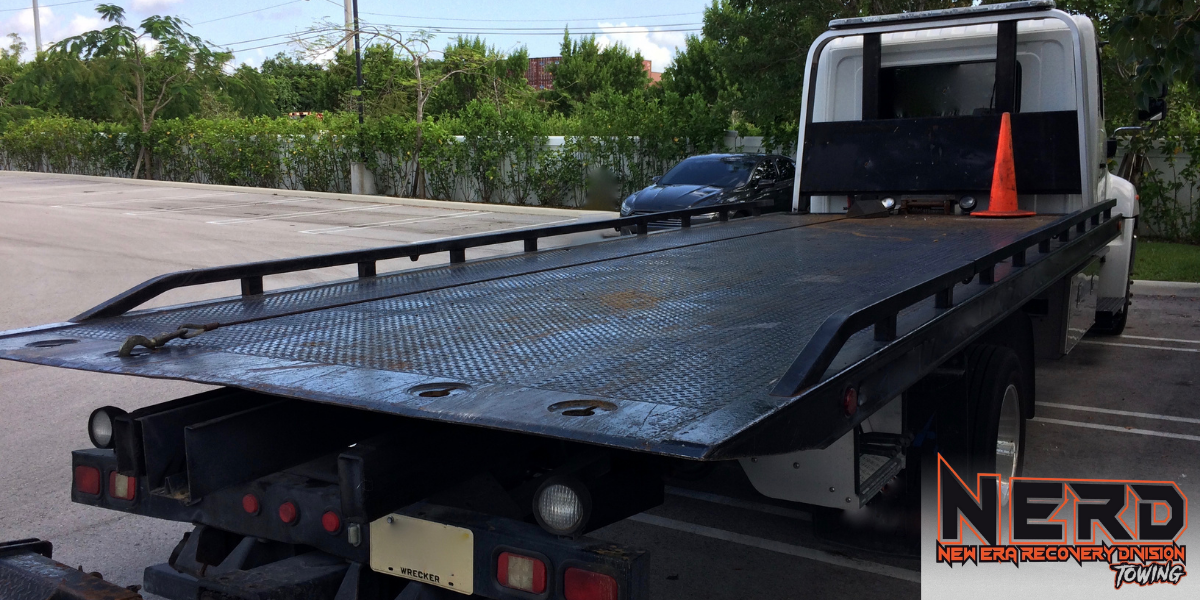
Flatbed towing carries the entire vehicle on the truck deck. The bed tilts toward the ground, the vehicle is driven or winched into position, and the wheels are secured before transport. Because the vehicle is fully supported, a flatbed can reduce extra drivetrain movement, scraping, or road contact.
AWD, 4WD, EV, and Low-Clearance Vehicles
Many modern vehicles require more care than a basic wheel-lift setup can provide. AWD and 4WD drivetrains may have manufacturer-specific towing requirements, while EVs, sports cars, modified vehicles, and low bumpers can be sensitive to loading angles.
Professional flatbed towing lets the operator assess clearance, wheel position, steering lock, damage, and access before loading. Share the year, make, model, and condition when requesting service.
Accident-Damaged and Non-Running Vehicles
A collision can leave a wheel bent, suspension damaged, steering locked, or bodywork too low to move normally. Forcing the vehicle to roll can make the problem worse.
A flatbed tow allows controlled recovery using the truck’s winch and deck. Tell the driver about missing wheels, leaking fluids, broken glass, blocked steering, or police instructions before loading begins.
Long-Distance or Planned Vehicle Transport
Flatbed towing can also make sense when the vehicle runs but you do not want it driven. This can include specialty vehicles, project cars, dealership transfers, or long-distance towing where keeping the vehicle fully off the roadway is preferred.
| Situation | Why a flatbed may help |
|---|---|
| AWD or 4WD vehicle | Keeps all four wheels off the road |
| Collision damage | Allows controlled loading when wheels or suspension are compromised |
| Low-clearance car | Reduces scraping risk with careful loading angles |
| Non-running vehicle | Uses winching instead of relying on vehicle power |
How the Towing Process Works in Federal Way
Good towing service starts before the truck arrives. Accurate details help the towing team send suitable equipment and avoid delays.
First, Describe the Vehicle and Problem
Share your pickup location, vehicle type, destination, and what happened. Mention whether it starts, rolls, steers, shifts into neutral, has accident damage, or is parked in a garage or tight space.
Next, the Loading Plan Is Checked
The operator looks at traffic, slope, clearance, wheel condition, and the safest truck position. The flatbed is lowered, and the vehicle is carefully driven or winched onto the deck.
Then, the Vehicle Is Secured and Transported
The vehicle is secured before the deck returns to transport position. Once everything is checked, the tow proceeds to the destination you approved.
For incidents on I-5, SR 18, or another active roadway, personal safety comes first. If the vehicle creates an immediate hazard or you are in danger, WSDOT’s Incident Response Program advises calling 911 so the appropriate responders can be sent.
Why Local Conditions Matter
Federal Way drivers deal with wet pavement, heavy commuter traffic, freeway shoulders, sloped residential streets, parking lots, and tight access around apartments and commercial properties. Those conditions can change how a flatbed approaches and loads a vehicle.
A professional flatbed operator needs enough room to lower the deck and create a safe loading angle. If your car is in a parking garage, narrow driveway, ditch, soft shoulder, or blocked position, say so before dispatch.
Washington rules also affect roadside towing situations. The Washington State Patrol road rules explain towing, impound, roadside safety, and emergency-zone requirements. If law enforcement is managing the scene, follow the officer’s instructions first.
Flatbed Towing or Roadside Assistance?
Not every disabled vehicle needs a tow. A dead battery, lockout, flat tire, or empty fuel tank may be handled with roadside assistance if the vehicle is otherwise safe to drive.
Flatbed towing is usually better when the vehicle has mechanical failure, accident damage, a locked drivetrain, unsafe tires, steering problems, or another condition that makes driving risky. Heavy towing may be required when the vehicle is too large or heavy for a standard flatbed.
If you are unsure, describe the problem rather than trying to diagnose it yourself. The goal is to match the service to the vehicle, not automatically send the biggest truck.
Get Federal Way Flatbed Towing When You Need It
When your vehicle needs careful transport, Federal Way flatbed towing gives you a secure way to move it without adding unnecessary stress. NERD Towing serves Federal Way and nearby communities across King and Pierce Counties, including Kent, Auburn, SeaTac, Tacoma, and surrounding areas.
To request service, get in touch with your pickup location, vehicle details, condition, and destination. Clear information helps the towing team prepare the right truck and make the process smoother from pickup to drop-off.
Frequently Asked Questions
How Much Does Flatbed Towing Cost in Federal Way?
The cost depends on pickup location, distance, vehicle size, access, and whether recovery work is needed. Ask for pricing based on your exact situation before the tow begins.
How Quickly Can a Flatbed Tow Truck Arrive?
Arrival time depends on traffic, weather, current demand, location, and required equipment. Providing an exact location and accurate vehicle details can help avoid dispatch delays.
Can a Flatbed Tow an AWD or 4WD Vehicle?
Yes, flatbed towing is commonly used for AWD and 4WD vehicles because all four wheels can remain off the road. The operator should still follow the manufacturer’s towing requirements.
Can You Flatbed Tow a Vehicle After an Accident?
Yes, when the vehicle can be loaded safely. Accident towing may require additional recovery work if the car has damaged wheels, steering, suspension, or is stuck off the roadway.
Do I Need to Be With the Vehicle at Pickup?
Not always, but access, keys, authorization, and the vehicle’s location can affect the process. Confirm pickup arrangements before leaving the vehicle unattended.
Where Can My Vehicle Be Taken?
A flatbed can usually transport the vehicle to your chosen repair shop, dealership, home, storage location, or another approved destination within the service area.
Other Services We Offer in Federal Way:
- 24 Hour Towing
- Auto Lockout Service
- Bus Towing
- Car Towing
- Emergency Road Service
- Emergency Roadside Assistance
- Emergency Towing
- Flat Tire Assistance
- Flatbed Towing
- Fuel Delivery
- Heavy Duty Towing
- Heavy Towing
- Jump Start Service
- Junk Car Removal
- Light Duty Towing
- Motorcycle Towing
- Off Road Recovery
- Roadside Assistance
- RV Towing
- Semi Truck Towing
- Tow Truck
- Towing
- Towing Company
- Towing Service
- Truck Towing
- Vehicle Recovery
- Vehicle Towing
- Wrecker Towing
Find Flatbed Towing Near Me:
Our Recent Projects
Read More:
How Far Can I Drive on A Flat Tire?
I Locked My Keys in My Car Who Do I Call?
Top 10 Towing Companies in Tacoma, WA
Who Makes Car Keys?