

When a rig stops moving, every minute affects the driver, the schedule, and the next delivery. Federal Way semi truck towing from NERD Towing gives drivers and fleet teams a practical next step when a tractor, trailer, or other large vehicle cannot safely continue. From mechanical breakdowns to accident-related recovery, the goal is simple: understand the situation, prepare the right response, protect the vehicle and cargo, and move it toward repair with as little added disruption as possible.
What You Need to Know Before the Tow Starts
- Available around the clock for urgent towing and recovery needs
- Support for tractors, trailers, bobtails, and other large work vehicles
- Vehicle weight, condition, cargo, and position help determine the towing setup
- Roadside assistance may solve some battery, fuel, or tire problems without a full tow
- Loaded units and accident scenes may require added planning before movement
- Clear pickup and destination details help dispatch prepare the right duty towing response
Semi Truck Towing Is More Than Moving a Disabled Rig
Large vehicles cannot be treated like passenger cars. A heavy unit may have damaged steering, locked wheels, a loaded trailer, limited shoulder space, or a driveline condition that changes how it should be moved. Proper planning reduces the chance of extra damage and avoidable delays.
What situations usually require towing?
Federal Way semi truck towing may be needed after an engine or transmission failure, electrical problem, collision, tire or axle damage, or another issue that makes continued driving unsafe.
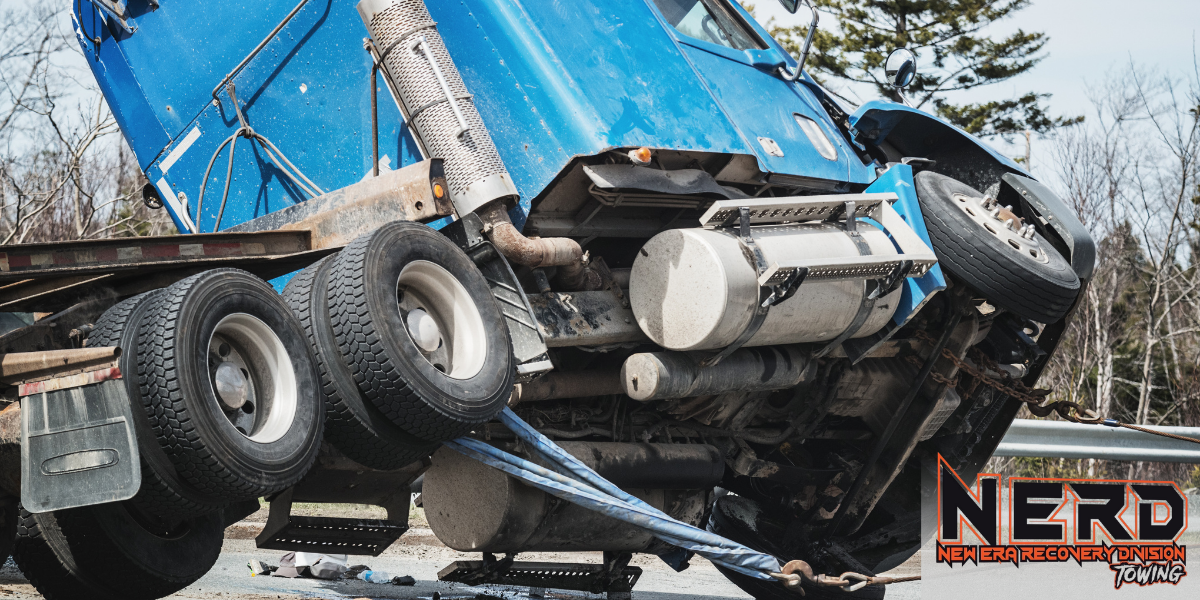
A simple breakdown and a complex truck recovery are different jobs. If the vehicle is upright on a wide shoulder, the process may be straightforward. If it is in a ditch, jackknifed, blocked by traffic, or positioned on soft ground, recovery may need to happen before towing begins.
What if the tractor or trailer is loaded?
Tell dispatch what the vehicle is carrying and whether the load has shifted. Weight distribution and cargo condition can affect the recovery plan and the heavy duty equipment required.
For interstate commercial vehicles, the FMCSA cargo securement rules explain federal requirements intended to prevent cargo from shifting or falling during transport. If a collision or sudden stop has disturbed the cargo, do not assume the rig can simply be hooked and moved.
How Federal Way Semi Truck Towing Works
Heavy towing starts with information, not the hook. When you request service, dispatch needs enough detail to understand the vehicle, the scene, and the safest way to approach it.
Step 1: Describe the vehicle and problem
Share the tractor type, trailer status, approximate size, whether the unit is loaded, and what failed. Mention blocked wheels, leaking fluids, steering damage, low clearance, or accident damage. Accurate details help the team prepare for the job.
Step 2: Explain the exact location
Give the roadway, direction of travel, nearest exit or cross street, and whether the vehicle is on a shoulder, ramp, lot, or private property. Access can be difficult around I-5, SR 18, and busy commercial roads.
The WSDOT South Puget Sound mobility dashboard identifies I-5 as a major economic and freight corridor through the region. For a disabled heavy vehicle, positioning and traffic exposure matter as much as distance.
Step 3: Choose towing, recovery, or roadside help
Not every call needs the same service. Roadside assistance may be appropriate for certain battery, fuel, or tire issues. Medium duty towing may fit some box trucks and smaller work vehicles. A tractor-trailer, loaded unit, or difficult accident recovery may require a heavier duty towing setup.
Step 4: Secure and move the vehicle
Before movement, the operator checks towing points, vehicle position, surrounding space, and visible damage. The destination is confirmed and the vehicle is secured for transport. Some equipment towing or flatbed towing jobs may need a different plan than a standard road tow.
Why Local Heavy-Duty Planning Matters in Federal Way
Federal Way sits along major South Sound routes used by commuters, delivery fleets, and freight traffic. A disabled rig near an interchange, warehouse access road, or busy arterial can become harder to recover as traffic builds.
Wet pavement, limited shoulder space, nighttime visibility, and a loaded trailer can all change how recovery is handled. Federal Way semi truck towing should account for those conditions before the vehicle moves.
What should you do while waiting?
If possible, get yourself away from active traffic, turn on hazard lights, and follow instructions from law enforcement or emergency personnel. If the vehicle, cargo, or accident scene creates an immediate danger, contact emergency services first.
Keep your phone available and gather the details dispatch may need, including vehicle type, cargo status, exact location, destination, and access concerns. Good information helps professional operators prepare a safer response.
What Affects Semi Truck Towing Cost?
There is no single price that fits every heavy towing call. Cost can change based on distance, vehicle weight, trailer configuration, cargo, scene access, time on site, recovery difficulty, and the equipment needed.
A disabled tractor on a clear lot is different from a loaded unit that needs winching near moving traffic. Federal Way semi truck towing is easier to estimate when dispatch receives complete information before the duty towing unit is sent.
Get the Right Towing Help in Federal Way
When a large commercial vehicle is down, you need clear communication and a practical plan. NERD Towing provides towing services for drivers, owner-operators, businesses, and fleet teams in Federal Way and nearby King and Pierce County communities, including Auburn, Kent, Tacoma, Lakewood, and Puyallup.
For Federal Way semi truck towing, get in touch and explain where the vehicle is, what you are driving, and what happened. The more detail you provide, the easier it is to prepare the right service response.
Frequently Asked Questions
How much does semi truck towing cost in Federal Way?
Pricing depends on distance, vehicle weight, recovery difficulty, cargo, access, and the towing equipment required. A straightforward tow usually involves fewer variables than a loaded or accident-damaged rig.
How quickly can a heavy tow truck arrive?
Arrival time depends on traffic, location, current demand, vehicle size, and the equipment needed. Exact location and accurate vehicle details help dispatch give a more realistic response time.
Can a loaded semi be towed?
Some loaded units can be towed, but total weight, cargo type, axle condition, and load stability must be considered first. Shifted cargo may require additional recovery work.
Do I need towing or roadside assistance?
Roadside assistance may be enough for some fuel, battery, or tire problems. Towing is generally needed when the vehicle cannot be repaired safely at the scene or cannot continue driving.
Can you tow a tractor without the trailer?
The correct method depends on the tractor’s condition and location, but tractor-only towing is commonly possible. Tell dispatch whether the trailer is attached so the right duty towing plan can be made.
Does NERD Towing serve areas outside Federal Way?
Yes. NERD Towing serves communities across King and Pierce counties, including nearby Auburn, Kent, Tacoma, Lakewood, and Puyallup, subject to current availability.
Other Services We Offer in Federal Way:
- 24 Hour Towing
- Auto Lockout Service
- Bus Towing
- Car Towing
- Emergency Road Service
- Emergency Roadside Assistance
- Emergency Towing
- Flat Tire Assistance
- Flatbed Towing
- Fuel Delivery
- Heavy Duty Towing
- Heavy Towing
- Jump Start Service
- Junk Car Removal
- Light Duty Towing
- Motorcycle Towing
- Off Road Recovery
- Roadside Assistance
- RV Towing
- Semi Truck Towing
- Tow Truck
- Towing
- Towing Company
- Towing Service
- Truck Towing
- Vehicle Recovery
- Vehicle Towing
- Wrecker Towing
Find Semi Truck Towing Near Me:
Read More:
How Far Can I Drive on A Flat Tire?
I Locked My Keys in My Car Who Do I Call?
Top 10 Towing Companies in Tacoma, WA
Who Makes Car Keys?