


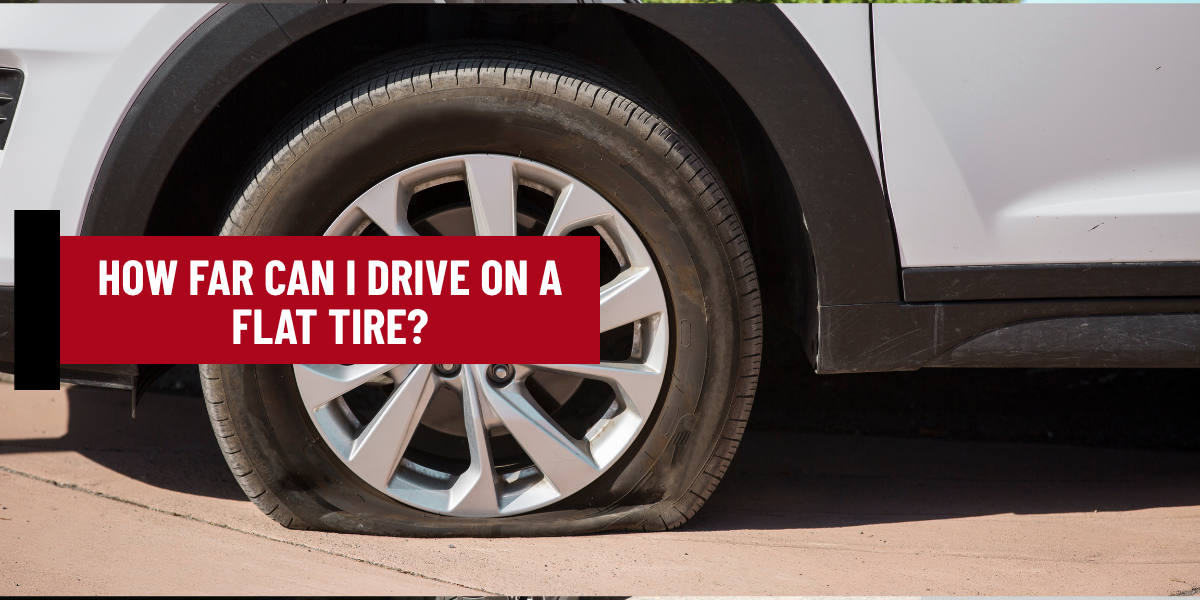
A sudden thump, steering pull, or tire pressure warning can turn a normal drive into a stressful question: how far can I drive on a flat tire? For a conventional tire that is truly flat, the safest answer is not to keep driving. If you are in an active traffic lane or another dangerous position, move only far enough to reach a safer place, then stop. Continuing can turn a simple puncture into a ruined tire, damaged wheel, or more expensive repair.
NERD Towing helps drivers across Tacoma and surrounding King and Pierce County communities when a flat, blowout, or other roadside problem leaves a vehicle unsafe to drive.
What You Need to Know Right Away
- Do not use a conventional flat tire for normal travel.
- If stopping immediately is dangerous, move only the minimum distance needed to reach a safer location.
- Low tire pressure is not automatically the same as a completely flat tire.
- Run-flat tires may allow limited travel, but only within manufacturer limits.
- Driving on a flat can damage the tire, wheel, suspension, steering, and brakes.
- A spare tire or roadside assistance is usually safer than trying to reach a tire shop.
How Far Can You Drive on a Flat Tire?
For a standard tire with no usable air pressure, do not plan to drive any normal distance. If you are safely parked, leave the car where it is. If traffic makes your position unsafe, creep only far enough to reach a shoulder, parking lot, side street, or another protected location.
The NHTSA tire safety guidance explains why proper tire pressure matters for vehicle control and tire durability. AAA’s flat tire guidance also explains how to respond safely when a tire fails. That is why a fixed rule such as “one mile is fine” is unreliable.
If you are asking how far can I drive on a flat tire because a shop is only a few blocks away, distance is still not the right test. If the sidewall is collapsed, the rim is close to the pavement, or the car is pulling hard, stop.
What Happens When You Keep Driving on a Flat?
A normal tire depends on air pressure to carry the vehicle’s weight. Once it goes flat, the sidewall can fold between the wheel and the road, creating heat and internal damage.
Driving farther can cause:
- Internal sidewall damage
- Tire bead separation
- A bent, cracked, or scraped rim
- Reduced steering and braking control
- Damage around the wheel if the tire begins to shred
A small tread puncture might have been suitable for tire repair at first. Driving after the pressure is gone can damage the sidewall and turn a potentially repairable tire into one that needs replacement.
Is Low Tire Pressure the Same as a Flat Tire?
No. A tire can be underinflated and still hold its shape, while a true flat has lost enough pressure that it can no longer support the vehicle correctly.
If the tire pressure monitoring system comes on, find a safe location and inspect the tire. A visibly sagging tire, rapid air loss, hissing, a damaged sidewall, or a strong steering pull deserves immediate attention.
Do not use the pressure printed on the tire sidewall as your normal inflation target. Use the vehicle manufacturer’s recommended tire pressure, normally found on the driver-side door placard or in the owner’s manual.
Can Run-Flat Tires Keep Going After Losing Air?
Often, yes, but only within their designed limits. Run-flat tires use reinforced construction that can temporarily support the vehicle even after significant pressure loss.
The exact driving distance and maximum speed vary by tire and vehicle manufacturer. Check the tire markings and owner’s manual before continuing. Treat any permitted distance as an emergency limit, not a target.
If the tire has major sidewall damage, the vehicle handles poorly, or the flat followed a hard pothole or curb impact, stop and arrange assistance. This is why how far can I drive on a flat tire has a different answer when the vehicle actually has run-flat technology.
What About a Spare Tire?
A properly installed spare tire is a better option than grinding a conventional flat tire against the road. However, temporary spare tires have their own pressure, speed, and mileage limits.
Check the spare itself and the vehicle owner’s manual before driving. If you are on a narrow shoulder, soft ground, a slope, or somewhere with poor visibility, trying to change the tire yourself may be more dangerous than calling roadside assistance.
Quick Guide by Tire Condition
| Tire condition | How far to drive | Best next step |
|---|---|---|
| Conventional tire, fully flat | No normal travel | Stop safely and use a spare or roadside help |
| Low pressure, still holding shape | Only as needed to reach a safe stop | Check pressure and inspect the tire |
| Run-flat tire | Manufacturer-limited distance | Follow tire and vehicle specifications |
| Temporary spare tire | Manufacturer-limited distance | Drive carefully to a tire service location |
Can the Flat Tire Still Be Repaired?
Sometimes. A small puncture in the tread area may be repairable after inspection. Sidewall damage, large cuts, damaged tire beads, or internal damage caused by driving flat can make replacement necessary.
Do not judge the tire only by what you can see outside. A tire driven without enough pressure can have hidden internal sidewall damage. A tire professional should inspect it before deciding whether repair is safe.
How to Avoid Flats and Catch Tire Problems Earlier
You cannot avoid every nail, pothole, or road hazard, but routine checks can reduce preventable flat tires. The U.S. Tire Manufacturers Association tire care guidance recommends regular tire pressure checks and inspection for tread wear and visible damage.
Check your tires and spare tire before long trips. Watch for cuts, bulges, uneven wear, vibration, and recurring pressure loss. If the same tire keeps needing air, find the cause rather than repeatedly filling it and continuing to drive.
When a Flat Tire Becomes a Towing Problem
A flat tire becomes a roadside assistance or towing problem when the tire is shredded, the wheel is damaged, there is no usable spare, the lug nuts cannot be removed, the vehicle is stranded in an unsafe location, or another mechanical problem happened at the same time.
NERD Towing supports drivers throughout Tacoma and communities across Pierce and King counties with towing, roadside assistance, and vehicle recovery services. The company has served local drivers since 2014, with its site emphasizing licensed and insured service, transparent pricing, fast response, and help with common roadside emergencies.
When the vehicle should not be driven, forcing it another few miles usually creates more risk. The better approach is to protect the tire, wheel, and car from additional damage and get the vehicle moved safely.
Why Drivers Choose NERD Towing
- Serving Tacoma and surrounding King and Pierce County communities since 2014
- Licensed and insured service
- Transparent pricing
- Fast-response roadside and towing support
- Assistance for many vehicle types and roadside problems
- Connections with trusted USDOT-certified carriers
Need Help With a Flat Tire in the Tacoma Area?
If your tire is flat and the vehicle is not safe to drive, do not risk turning a tire problem into wheel, suspension, or steering damage. NERD Towing serves Tacoma and surrounding communities throughout Pierce and King counties, including Seattle, Kent, Federal Way, Auburn, Lakewood, South Hill, Puyallup, University Place, Sumner, Fife, Spanaway, and Graham.
Get in touch with NERD Towing to request roadside assistance or towing and share your location, vehicle details, and tire condition so the right help can be arranged.
Frequently Asked Questions
Can I drive 1 mile on a flat tire?
You should not plan to drive one mile on a conventional flat tire. If the car is in immediate danger, move only the minimum distance necessary to reach a safer location.
Can I drive slowly on a flat tire?
Driving slowly does not make a conventional flat safe. The vehicle’s weight can still crush the sidewall and damage the wheel even at low speed.
Can I put air in a flat tire and drive?
Only if the tire holds pressure, has no obvious unsafe damage, and returns to the vehicle manufacturer’s recommended pressure. If air escapes quickly, stop driving.
How do I know if my tire is run-flat?
Check the tire sidewall, owner’s manual, or vehicle documentation for the manufacturer’s run-flat designation. Never assume a car has run-flat tires simply because it has no spare.
Can a flat tire damage my rim?
Yes. Once the tire can no longer cushion the wheel, the rim may contact the road and become bent, cracked, or heavily scraped.
how far can I drive on a flat tire if I am close to home?
Do not continue simply because home is nearby. If the tire is truly flat, stop safely and use a spare tire or roadside assistance rather than risking additional damage.