

A roadside emergency is stressful enough. Finding out that the car in trouble is not even yours can make the situation feel even more confusing. Whether you are driving a friend’s vehicle, helping a family member, or borrowing a car for the weekend, you may wonder: can you use roadside assistance for someone else’s car?
The answer depends largely on How your assistance plan is structured. Some plans follow the person who purchased the coverage, while others are connected to a specific vehicle. Understanding that difference can help you avoid surprises when you need roadside service most.
For drivers in need of dependable help, NERD Towing understands that emergencies do not always happen in your own car. Knowing How coverage works can help you make informed decisions and get the right assistance when a breakdown, a flat tire, a dead battery, or a towing situation occurs.
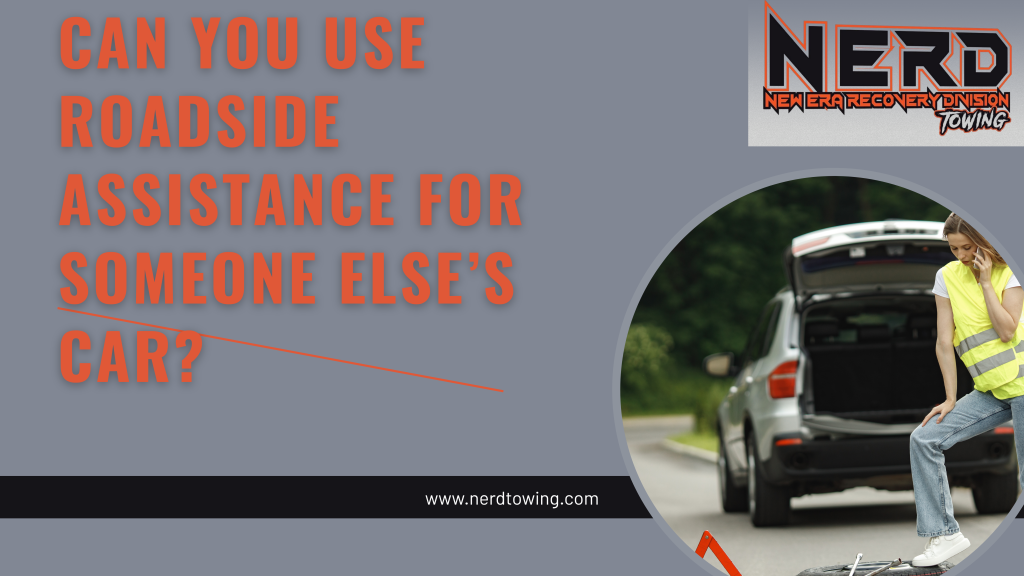
Can You Use Roadside Assistance for Someone Else’s Car?
In many cases, yes, you may be able to use roadside assistance for another person’s car, but it depends on your plan type. Some memberships are tied primarily to the member, meaning you can receive service even when you are driving a vehicle that belongs to someone else.
This is commonly known as person-based roadside coverage. Under this arrangement, your eligibility follows you rather than a particular vehicle. If you are the covered member and you are present when the problem occurs, your plan may provide assistance.
However, not every policy works this way. Vehicle-based coverage is connected to a particular enrolled vehicle. If you are driving your friend’s car and that vehicle is not listed on the plan, your roadside benefits may not apply.
Before requesting service, check your membership terms or contact the provider. A few minutes of verification can save you from unexpected costs.
How Roadside Assistance Plans Usually Work
A roadside plan is designed to provide practical help when a vehicle becomes disabled. Depending on the provider and coverage level, services may include towing, jump-starts, flat-tire assistance, fuel delivery, lockout help, or other emergency support.
The important detail is that different plans define eligibility in different ways. Some are designed around the person who purchases the membership, while others protect a particular vehicle.
For example, imagine you have an assistance plan and borrow your friend’s sedan. If your coverage is person-based, you may still qualify for service as the enrolled member. If the coverage is vehicle-based, the borrowed sedan may not qualify.
This distinction becomes particularly important when families share vehicles, employees use company cars, or people regularly borrow cars from friends.
Plan Type: Person-Based Roadside vs. Vehicle-Based Coverage
Understanding the difference between person-based coverage and vehicle-based plans is one of the easiest ways to determine whether your roadside benefits can extend to someone else’s car.
Person-based roadside generally follows the covered individual. If you are present during the emergency, your membership may cover eligible roadside service, regardless of which vehicle you are driving.
Vehicle-based plans, on the other hand, usually follow the enrolled vehicle. The vehicle must meet the policy’s requirements for roadside benefits to apply, even if another person is behind the wheel.
Some important factors to check include:
- Whether your membership follows you or the enrolled vehicle
- Whether borrowed or rented vehicles are included
- Whether another person can request service on your behalf
- How many service calls are allowed during a membership period
- Whether towing coverage has mileage or destination limits
- Whether additional charges can apply outside your coverage
Because every provider can establish different rules, never assume that one company’s policy works exactly like another’s.
What If You Are Driving a Friend’s Car?
Borrowing a car from a friend is common, and emergencies can happen regardless of ownership. If you are behind the wheel when the vehicle breaks down, the first question is whether your own roadside membership applies.
With person-based coverage, your membership may provide assistance while you are driving an eligible borrowed vehicle. However, restrictions can apply.
With vehicle-based coverage, the friend’s vehicle may need its own active roadside benefits. In that situation, your personal membership might not extend to the vehicle.
If you are unsure, contact your provider before requesting a roadside service. Give them accurate information about the vehicle, your relationship to the owner, and your current location. This allows them to determine eligibility before dispatching help.
If the situation is urgent and coverage is unclear, NERD Towing can be a practical option for arranging towing or roadside help when you need assistance getting a disabled vehicle to a safe location.
How Insurance and Roadside Plans Differ
Many drivers assume car insurance automatically includes roadside assistance. In reality, roadside benefits may be optional or offered separately depending on the insurer and policy.
Some insurance companies provide roadside assistance as an add-on. Others may include limited emergency services with certain policies. Providers such as GEICO offer roadside assistance options subject to their specific terms and eligibility requirements.
Insurance coverage and a standalone roadside membership can also work differently. Your insurance policy may be connected to covered vehicles, while a separate membership could potentially be person-based.
It is worth checking both before an emergency happens. Look at your policy documents to determine whether towing, battery assistance, lockout service, or other roadside benefits are included.
You should also verify whether using the service could involve limits, deductibles, service fees, or restrictions on the number of calls.
Does Towing Coverage Apply to Another Vehicle?
Towing coverage is one of the most important benefits to understand when borrowing another person’s vehicle. A disabled vehicle may need to be transported to a repair shop, home, or another approved destination.
Whether towing applies depends on the source of your coverage. A person-based plan may provide towing when you are the covered member. A vehicle-based plan may only provide towing for the vehicle specifically listed under the membership.
There can also be mileage limitations. For instance, a plan may cover towing only within a specified distance, while longer trips may incur additional charges.
If the borrowed vehicle is not covered under your plan, you may need to contact the vehicle owner’s provider or arrange independent towing.
NERD Towing can help when you need dependable towing assistance for a vehicle that cannot continue driving safely. Having a professional towing option available can make an unexpected breakdown much easier to manage.
What to Check Before Requesting Roadside Service
The worst time to discover a coverage limitation is when your vehicle is already sitting on the shoulder of a busy road. Reviewing your benefits ahead of time gives you a clearer idea of what to expect.
Check the provider’s rules regarding borrowed vehicles, passengers, drivers, and eligible vehicles. Also look at whether your coverage is person-based or vehicle-based.
If you have a membership or another roadside membership, review the specific terms rather than relying on assumptions. The same applies if roadside benefits are included through your insurance company.
You should know whether your assistance plan covers the following:
- Towing and applicable mileage limits
- Battery jump-start service
- Flat-tire assistance
- Vehicle lockout assistance
- Fuel or fluid delivery
- Service-call limits
- Borrowed or rented vehicles
Keeping your membership information accessible can also help speed up the process when you need help.
What to Do When Another Person’s Car Breaks Down
If you are driving someone else’s vehicle and it becomes disabled, focus first on safety. Move the car away from traffic if it can be done safely, turn on the hazard lights, and remain in a secure location while waiting for help.
Next, determine whose coverage may apply. Check your own roadside plan and, if necessary, ask the vehicle owner to review their coverage. If both policies are unclear, contact the provider directly.
Give the roadside company accurate information about the vehicle and its location. Explain whether you own the vehicle, are borrowing it, or are driving it with the owner’s permission.
Avoid authorizing expensive towing or repair services without understanding the cost if coverage has not been confirmed.
For situations where professional towing is needed, NERD Towing can provide assistance focused on safely transporting your vehicle so you can move forward with less stress.
Choose Reliable Help When Coverage Gets Complicated
So, can you use roadside assistance for someone else’s car? Often, you can, especially when your membership provides person-based coverage. But vehicle-based plans may work differently, making the specific terms of your coverage extremely important.
Do not assume that your roadside benefits automatically transfer to every vehicle you drive. Check your plan type, understand your coverage limits, and know How towing and other services are handled before an emergency occurs.
When you need dependable help and coverage questions make the situation more complicated, NERD Towing is ready to help you get the roadside service you need. From unexpected breakdowns to towing situations, having a trusted professional available can turn a stressful roadside problem into a manageable next step.
When the road throws you an unexpected problem, NERD Towing helps turn a stranded moment into a safe ride forward.