


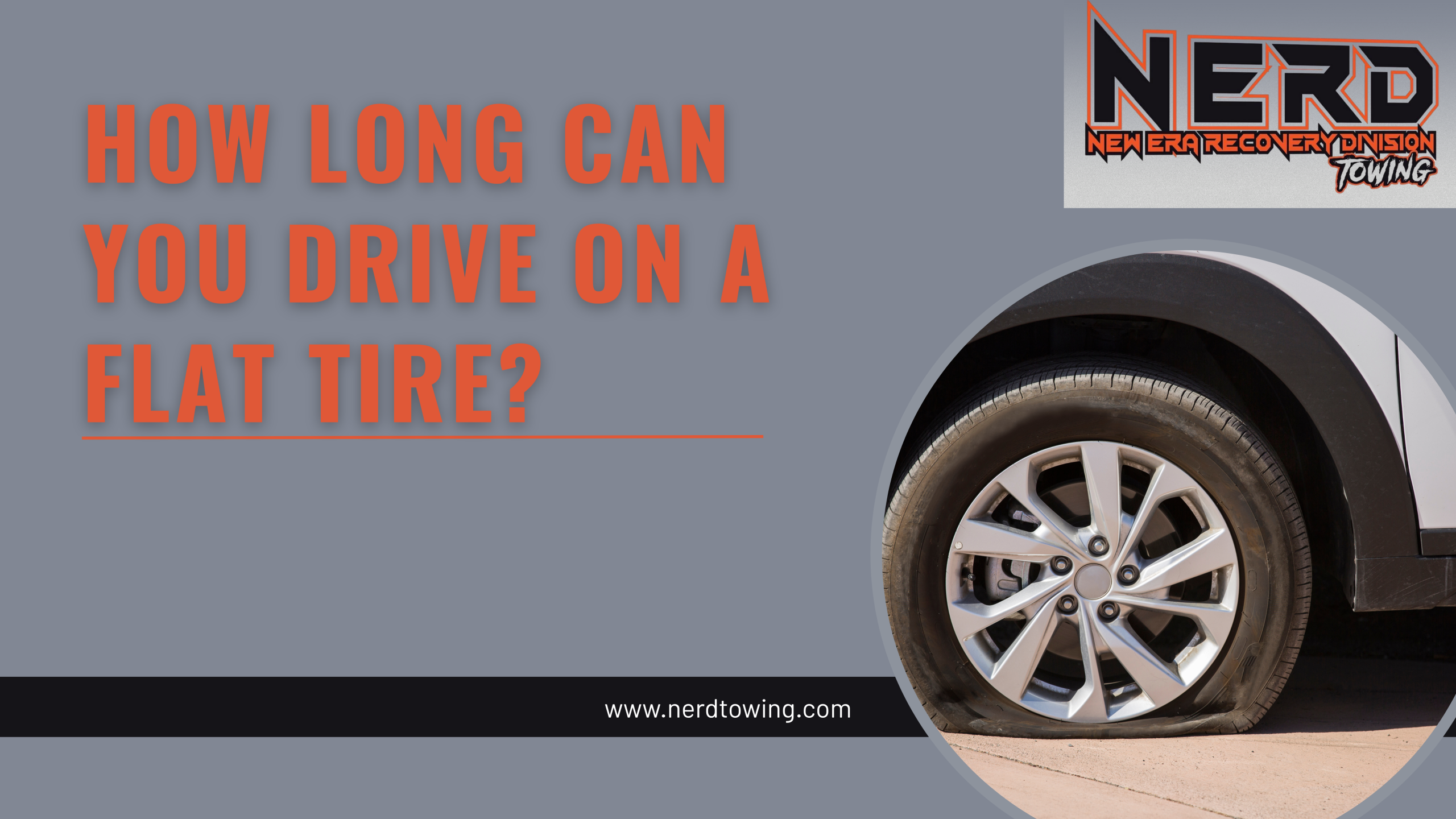
A flat tire can turn an ordinary drive into a dangerous situation in seconds. Whether you are heading to work, traveling on the highway, or driving through your neighborhood, losing tire pressure can put your safety and vehicle at risk. One of the first questions drivers ask is: How long can you drive on a flat tire without causing serious damage? The safest answer is that you should not continue driving on a completely flat tire. Even a short distance can damage the tire, bend the wheel rim, and make your vehicle difficult to control.
Understanding what to do when a tire goes flat can help you avoid expensive repairs and unnecessary risks. NERD Towing understands how stressful unexpected roadside problems can be and why getting help quickly matters. In this guide, we explain the dangers of driving on a flat tire, the risks involved, and the steps you can take to reach a safe location.
How Long Can You Drive on a Flat Tire Before Damage Occurs?
In most situations, you should stop driving as soon as you can safely pull over. A completely flat tire cannot properly support the weight of your vehicle, and the tire’s internal structure may begin breaking down immediately under pressure.
There is no reliable distance you can drive without causing damage. Even traveling a few hundred feet may harm the tire or wheel, especially if the vehicle is heavy, the road is rough, or you are moving at a higher speed.
Some drivers attempt to reach the nearest gas station or repair shop because it seems close. However, continuing to drive can turn a simple tire replacement into a more expensive repair involving rim damage, suspension components, or other parts.
If your tire suddenly loses air, slow down gradually, avoid sharp turns, and look for a safe place to stop. NERD Towing can help drivers explore roadside assistance options when a flat tire makes continuing the journey unsafe.
What Happens When You Drive on a Flat Tire?
A tire is designed to maintain its shape and support your vehicle through the air pressure inside it. When that pressure disappears, the sidewalls can become compressed between the road and the wheel.
This creates several problems. The tire may overheat because of excessive friction, while its internal cords and rubber structure can tear apart. As the tire deteriorates, it may separate from the wheel or become impossible to repair.
You may also notice that your vehicle pulls to one side, vibrates, or responds differently when you steer. These warning signs mean that the vehicle may no longer handle normally.
Continuing to drive can cause the metal rim to strike the road surface. Once the rim becomes bent or cracked, replacing the tire alone may not solve the problem. NERD Towing recommends arranging professional help rather than risking additional damage by driving on a flat.
Why Driving on a Flat Tire Is Dangerous
Tire problems affect more than your repair bill. They can also compromise your ability to control your vehicle, particularly when you are traveling at highway speeds.
A sudden tire failure can make steering difficult and increase the chance of losing control. On wet roads, loose gravel, or uneven pavement, the situation can become even more challenging. Nearby vehicles may also have little time to react if you stop unexpectedly.
The risks increase when you continue driving with a severely damaged tire. Your vehicle may lean toward one side, braking performance can become less predictable, and damaged rubber may interfere with nearby components.
For safe driving, pay attention to changes in handling, unusual noises, and dashboard tire pressure warnings. Never assume a vehicle is safe simply because it can still move.
If you experience a flat tire in traffic, focus on reaching a safe stopping location without making sudden movements. Turn on your hazard lights once appropriate and request roadside assistance when needed.
Can You Drive a Short Distance on a Flat Tire?
Technically, a vehicle may still move with a flat tire, but that does not mean driving it is safe. The amount of damage depends on factors such as tire construction, vehicle weight, road conditions, speed, and how much air remains inside the tire.
A tire with a slow leak may retain enough pressure for a limited time, while a sudden loss of air can leave the tire unable to support the vehicle properly. However, neither situation guarantees that you can safely cover a particular distance.
If you notice a slow leak, pull over somewhere safe and check the tire pressure if you can do so without exposing yourself to traffic. If the tire is visibly collapsed, avoid driving on it.
Do not try to reach a repair shop simply because it is only a few blocks away. Calling NERD Towing for assistance can help you avoid turning a manageable tire problem into a costly roadside emergency.
What Is a Run-Flat Tire, and How Far Can It Go?
Run-flat tires are designed to provide limited mobility after losing air pressure. Their reinforced sidewalls help support the vehicle temporarily, allowing the driver to travel to a suitable repair facility instead of stopping immediately in an unsafe location.
Many run-flat tire manufacturers specify a maximum distance of approximately 50 miles at speeds up to 50 mph after a complete loss of pressure. However, these limits vary by tire model, manufacturer, vehicle, and driving conditions. You should always follow the instructions in your vehicle owner’s manual and the tire manufacturer’s guidance.
A run-flat tire is not designed for unlimited driving without air. Excessive speed, heavy loads, rough roads, or additional tire damage can reduce its remaining capability.
Vehicles equipped with these tires often have a tire pressure monitoring system because a run-flat tire may not look dramatically different after losing pressure. Pay attention to warning lights and arrange an inspection as soon as possible.
If you are uncertain whether your tires have run-flat capabilities, do not assume they do. NERD Towing can be a useful option when you need assistance getting your vehicle to a repair facility.
What Should You Do When Your Tire Goes Flat?
Your first priority should be protecting yourself and other road users. Avoid slamming on the brakes or turning the steering wheel sharply, as these reactions can make the vehicle harder to control.
Follow these practical steps when you discover a flat tire:
- Reduce your speed gradually: Keep a steady grip on the steering wheel and avoid sudden braking.
- Find a safe place to stop: Move away from moving traffic if possible, preferably onto a wide shoulder, parking area, or nearby safe location.
- Turn on your hazard lights: Make your vehicle more visible to approaching drivers.
- Assess the situation carefully: Look for visible tire damage only when you are safely away from traffic.
- Use a spare tire if appropriate: Install it only if you have the right equipment, understand the procedure, and can work in a safe location. Follow the spare tire’s speed and distance restrictions.
- Request roadside assistance: If the location is dangerous, you lack the necessary tools, or the tire has severe damage, arrange professional help.
Never attempt to change a tire beside fast-moving traffic if doing so puts you at risk. NERD Towing can help you consider an appropriate towing or roadside assistance solution when driving is no longer a safe option.
How Road Conditions and Speed Affect Tire Damage
The condition of the road plays an important role in how quickly a flat tire deteriorates. Rough pavement, potholes, debris, and uneven surfaces can increase the stress placed on a deflated tire and wheel.
Speed is another major factor. At higher speeds, a damaged tire experiences greater movement and friction, which can accelerate heat buildup and structural failure. A vehicle traveling at highway speed may also be harder to control if the tire suddenly collapses.
Vehicle weight matters, too. Heavier vehicles place greater loads on their tires, potentially increasing the likelihood of additional damage when air pressure is lost.
For these reasons, there is no universal answer to how far a flat tire can travel before it fails. Even if you are moving slowly, continuing to drive on a fully deflated tire can cause severe damage.
NERD Towing encourages drivers to take tire pressure warnings seriously and avoid unnecessary driving when a tire appears damaged. Prompt action can protect your vehicle and help you get back on the road more safely.
Can a Flat Tire Be Repaired, or Does It Need Replacement?
Whether a flat tire can be repaired depends on the location and severity of the damage. A small puncture in the repairable tread area may be suitable for professional repair, provided the tire has not suffered additional internal damage.
However, a tire that has been driven while completely flat may have structural problems that are not visible from the outside. Damaged sidewalls, exposed cords, large cuts, and extensive heat damage often mean the tire must be replaced.
A qualified tire professional should inspect the tire internally before deciding whether a repair is appropriate. Simply adding air does not make a damaged tire safe to use.
The wheel rim should also be checked for bends, cracks, or other damage. If the rim cannot hold air securely, even a replacement tire may not solve the problem.
Taking your vehicle for an inspection after a flat can prevent recurring pressure loss and unexpected failure. When the vehicle cannot safely reach a repair shop, NERD Towing can help you arrange suitable assistance instead of risking further damage.
Prevent Flat Tires and Know When to Call for Help
Although not every flat tire can be prevented, regular maintenance can reduce the chances of an unexpected problem. Check your tire pressure according to the manufacturer’s recommendations, inspect the tread for uneven wear, and look for cracks, bulges, or embedded objects.
Replace tires when their tread or condition no longer meets safety requirements. Avoid overloading your vehicle, and make sure your spare tire is properly inflated and ready for use. A tire pressure monitoring system can provide an early warning, but it should not replace regular inspections.
If you discover a slow leak, arrange an inspection promptly rather than waiting for the tire to become completely flat. Keeping a roadside emergency kit and knowing how to contact a reliable service provider can also make an unexpected breakdown easier to manage.
When a flat tire stops your journey, making the safe choice can save you time, money, and stress. NERD Towing is here to help when your vehicle cannot safely continue its trip. Instead of risking further tire damage or putting yourself in danger, contact NERD Towing to discuss towing or roadside assistance options and get the support you need.