



A dead car battery can turn an ordinary drive into an unexpected roadside problem, but a proper jump can often get you moving again in minutes. If you are wondering how long to jump-start a car, the answer depends on the battery condition, the vehicles or equipment being used, and whether the battery can still hold a charge. Knowing the right steps can help you stay calm and avoid unnecessary damage.
For drivers who need dependable roadside assistance, NERD Towing provides professional towing and roadside support when a simple battery jump is not enough. Whether your car is parked at home, outside a business, or stranded along the road, having the right help available can make the situation much easier to manage.
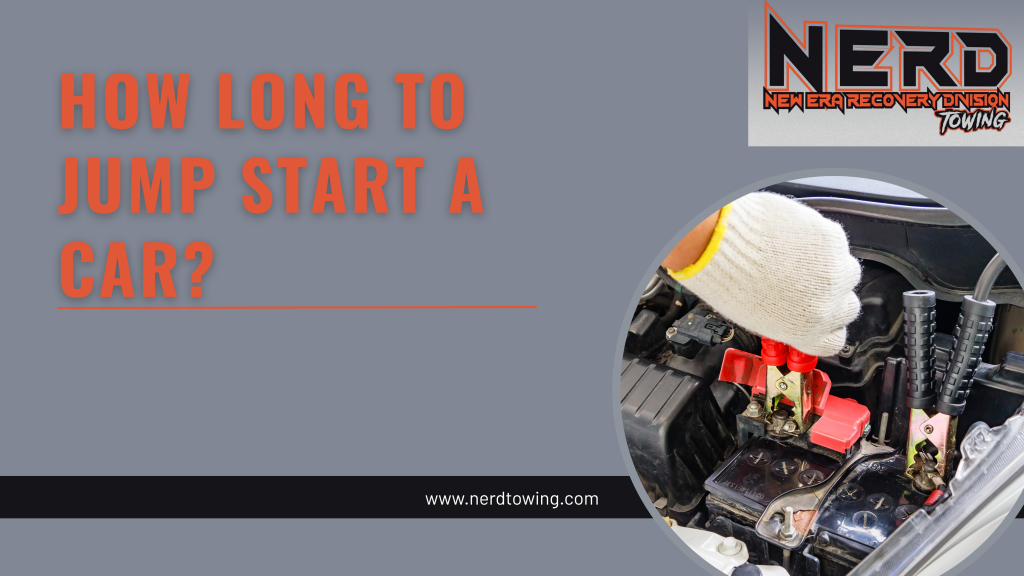
How Long to Jump Start a Car?
In many situations, jump-starting a car takes approximately 5 to 15 minutes. This includes positioning the vehicles, connecting the booster cables, allowing the working battery to provide power, and attempting to start the dead car.
However, the actual time can vary. A battery that is only slightly drained may respond almost immediately, while a severely depleted car battery may require several minutes of charging before the engine can start.
If the engine does not start after a few careful attempts, repeatedly jumping it may not solve the problem. The battery could be damaged, the starter may have an issue, or another electrical fault may be preventing the vehicle from starting. In that situation, calling NERD Towing for professional roadside service can be a safer choice.
What Causes a Dead Battery?
A dead battery is one of the most common reasons a car refuses to start. Several everyday situations can drain a battery without warning.
Leaving headlights, interior lights, or accessories running while the engine is off can quickly reduce available power. Extreme temperatures, an aging battery, poor charging performance, and infrequent driving can also contribute to battery failure.
Sometimes, a driver notices warning signs before the battery completely fails. Slow engine cranking, dim lights, clicking when turning the key, or electrical accessories behaving strangely can indicate that the battery needs attention.
Regular auto maintenance can reduce the chances of being stranded. Checking the battery condition and keeping the battery terminals clean can help maintain a reliable electrical connection.
Preparing for Safe Jump Starting
Before attempting a battery jump, take a moment to prepare. Safety should always come before speed. Make sure both cars are in a safe location away from moving traffic. If possible, park the vehicles on level ground and position them close enough for the cables to reach without stretching.
Turn off the engines and switch off electrical accessories such as radios, lights, and climate controls. If you are using another vehicle, make sure its battery has the same voltage as the dead battery.
If the vehicle manufacturer provides specific jump-starting instructions, follow those directions. Some modern vehicles, especially vehicles with sensitive electronic systems, may have designated connection points rather than traditional battery posts.
When uncertainty arises, professional assistance from NERD Towing can help prevent avoidable electrical or mechanical problems.
Connecting the Battery Terminals Correctly
The order in which you connect the jumper cables matters. Incorrect connections can cause sparks or potentially damage electrical components.
Once both vehicles are safely positioned and turned off, locate the battery and identify the positive and negative terminals. The positive terminal is generally marked with a plus sign and may have a red cover.
Connect the red clamp to the positive terminal of the dead battery. Attach the other red clamp to the positive terminal of the working battery. Next, connect the black clamp to the negative terminal of the working battery.
For the final connection, many vehicle manufacturers recommend attaching the remaining black clamp to an appropriate unpainted metal grounding point on the dead car, rather than directly to its negative battery terminal. Check the owner’s manual for the recommended location.
Keep the clamps away from moving engine components, and ensure they do not touch each other while connected.
Starting the Car With Booster Cables
After the cables are connected correctly, start the vehicle with the working battery. Allow its engine to run for a few minutes. This gives the dead battery an opportunity to receive some electrical power.
Then try to start the vehicle with the drained battery. Avoid holding the key or pressing the start button continuously for an extended period. If the engine does not turn over, wait briefly before trying again.
Once the car starts, do not immediately disconnect everything. Let both vehicles run for a short period while keeping the connections secure. Then carefully remove the cables in the reverse order of connection.
If the vehicle starts but quickly shuts off, the battery may not be the only problem. An alternator or charging-system issue could be preventing the battery from receiving the power it needs.
Using a Jump Starter Instead of Another Car
A portable jump starter can be a useful alternative when another vehicle is unavailable. These compact devices contain their own battery and can provide enough power to help start a vehicle.
Before using it, confirm that the jump starter is compatible with your vehicle. Follow the manufacturer’s instructions carefully and identify the correct positive and negative connection points.
A jump starter is especially convenient for drivers who travel frequently or spend time in areas where roadside assistance may take longer to arrive. However, it is not a permanent solution for a failing battery.
If a jump starter gets the engine running but the vehicle still has starting problems, arrange an inspection or roadside service. NERD Towing can help drivers determine whether they need further assistance, a tow, or a professional repair.
When Jump Starting Does Not Work
Sometimes a jump simply will not solve the problem. If the engine makes repeated clicking sounds, there is no electrical response, or the vehicle fails to start after proper connections are made, the battery may be completely failed.
A battery can also have an internal fault that prevents it from accepting a charge. Other possible causes include a faulty starter, alternator problems, damaged cables, ignition issues, or electrical system faults.
Never assume that every no-start situation is caused by the battery. If the jump does not work, avoid repeatedly connecting and disconnecting cables without identifying the cause.
There are also special considerations for hybrid and electric vehicles. Their starting and high-voltage systems can differ significantly from those in conventional vehicles. Do not attempt procedures that are not approved by the manufacturer. Professional assistance is the better option when you are unsure.
How to Prevent Future Battery Problems
A little maintenance can go a long way toward preventing another roadside battery failure. Pay attention to warning signs and have the charging system checked when necessary.
Consider these simple habits:
- Turn off lights and accessories before leaving the vehicle.
- Check the battery periodically for corrosion or loose connections.
- Keep battery terminals clean and secure.
- Replace an aging battery before it becomes unreliable.
- Have the charging system inspected if the battery repeatedly loses power.
- Carry a properly rated jump starter if you frequently travel long distances.
If your battery repeatedly becomes dead, a single jump is unlikely to fix the underlying issue. A professional inspection can determine whether the battery needs replacement or another component requires attention.
For drivers who suddenly find themselves unable to jump-start their vehicle, NERD Towing offers a practical solution when getting back on the road matters most.
Get Back on the Road With NERD Towing
So, how long to jump-start a car? In a straightforward situation, it may only take a few minutes, but not every dead battery responds the same way. Proper connections, battery condition, and the cause of the starting problem all affect the outcome.
If your vehicle will not start, do not let a dead battery turn a small inconvenience into a stressful roadside experience. NERD Towing can provide dependable assistance when you need help getting your vehicle moving again. Whether you need a battery jump, roadside support, or towing to an auto shop for further repair, professional help can give you confidence when your vehicle refuses to cooperate.
When your car stops, the right help keeps your journey moving. Contact NERD Towing for reliable roadside assistance when you need it most.